Sample clarification desk
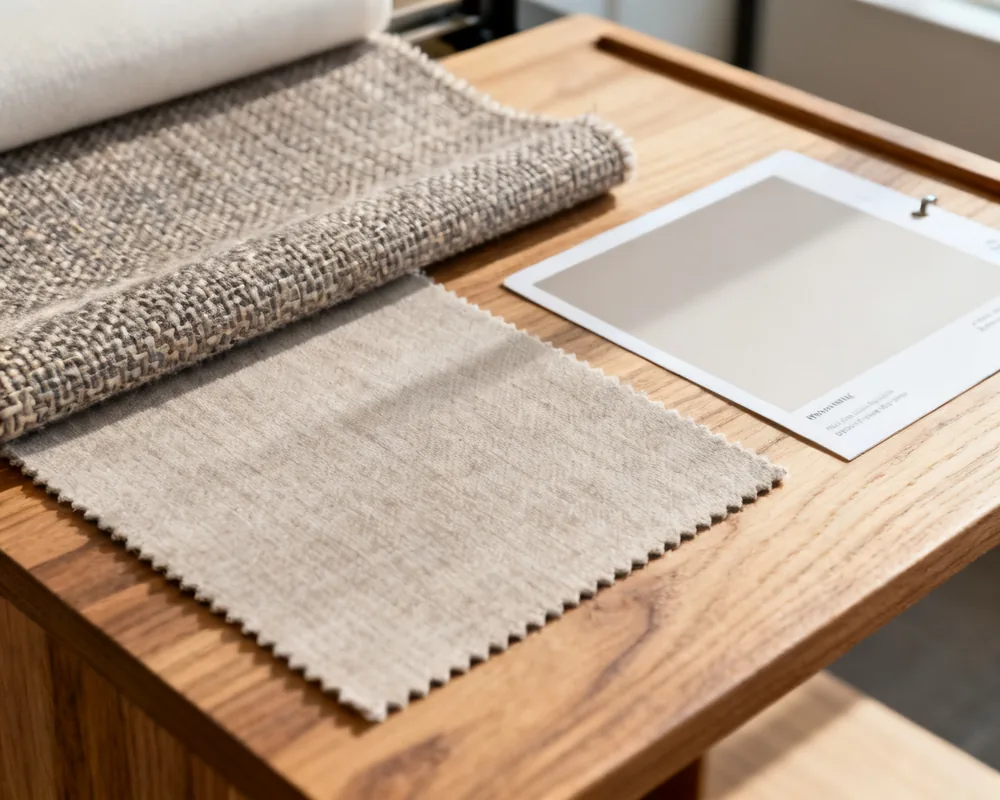
Describe the difference
A useful sample note starts from the cloth in hand, not from a category label. If you are comparing two protective textiles, say whether the difference is yarn size, weave density, a heat-related finish, or only the shade. If you are comparing upholstery, say whether the question is pile direction, weave structure, seating abrasion, or colour under the light you actually use. Writing that distinction keeps the next cutting aimed at one decision.
- What should stay the same: fibre blend, nominal GSM, usable width, or the approved shade?
- Which construction or finishing property needs review: weave, pile, coating if one is present, or a protective treatment?
- How will the next sample be assessed: side-by-side handle, a named test method, or a seating mock-up?
Keep the reference cutting dated in your own notes. A later piece can only be compared with it when both share the same construction story. If the first piece was scoured and the second was finished, the handle change may come from that process step rather than from a different fibre. Record the finish state in the same sentence as the shade, so a colour comment is not mistaken for a construction approval. A lab dip is not a shade band, and a shade band is not a bulk approval. GSM in g/m² and usable width in cm stay beside warp and weft. Tear strength under ISO 13937 and tensile strength under ISO 13934-1 do not describe colourfastness. Roll inspection and batch traceability are papers to request for that piece.
Quantity and destination belong in the same packet, but they answer a different question from the cloth itself. A request for a larger length does not prove that the sample construction is the one you want repeated. State the order context after the material question is clear: how much, where it needs to arrive for your own review, and which approval note should travel with it. Leave timing as a point to discuss rather than a date this page can confirm.
When the reference is incomplete
State the missing information rather than assume two cloths are equivalent. A shared fibre name does not fix the weave. A shared GSM, written in g/m², does not fix usable width in cm. A photograph does not fix shade. If the cutting has no composition note, ask for the declaration that belongs to that construction, with percentages by mass that add to 100, and keep the gap visible until it arrives. Natural and synthetic fibres answer different briefs: handle and moisture on one side, strength and drying on the other, with no environmental ranking from the fibre name alone. A coated cloth and a laminated cloth also split: coating add-on and adhesion versus film peel and specimen state. Stock needs a dated batch. Custom development needs a sample and a later bulk-approval step. Water resistance under ISO 811 and moisture movement under ISO 11092 stay in separate lines. Abrasion under ISO 12947, pilling under ISO 12945, tear under ISO 13937, and heat behaviour are separate properties; use a result only when it names the method and the piece that was tested.